


Insurance Agent Training: Building High Performing Professionals
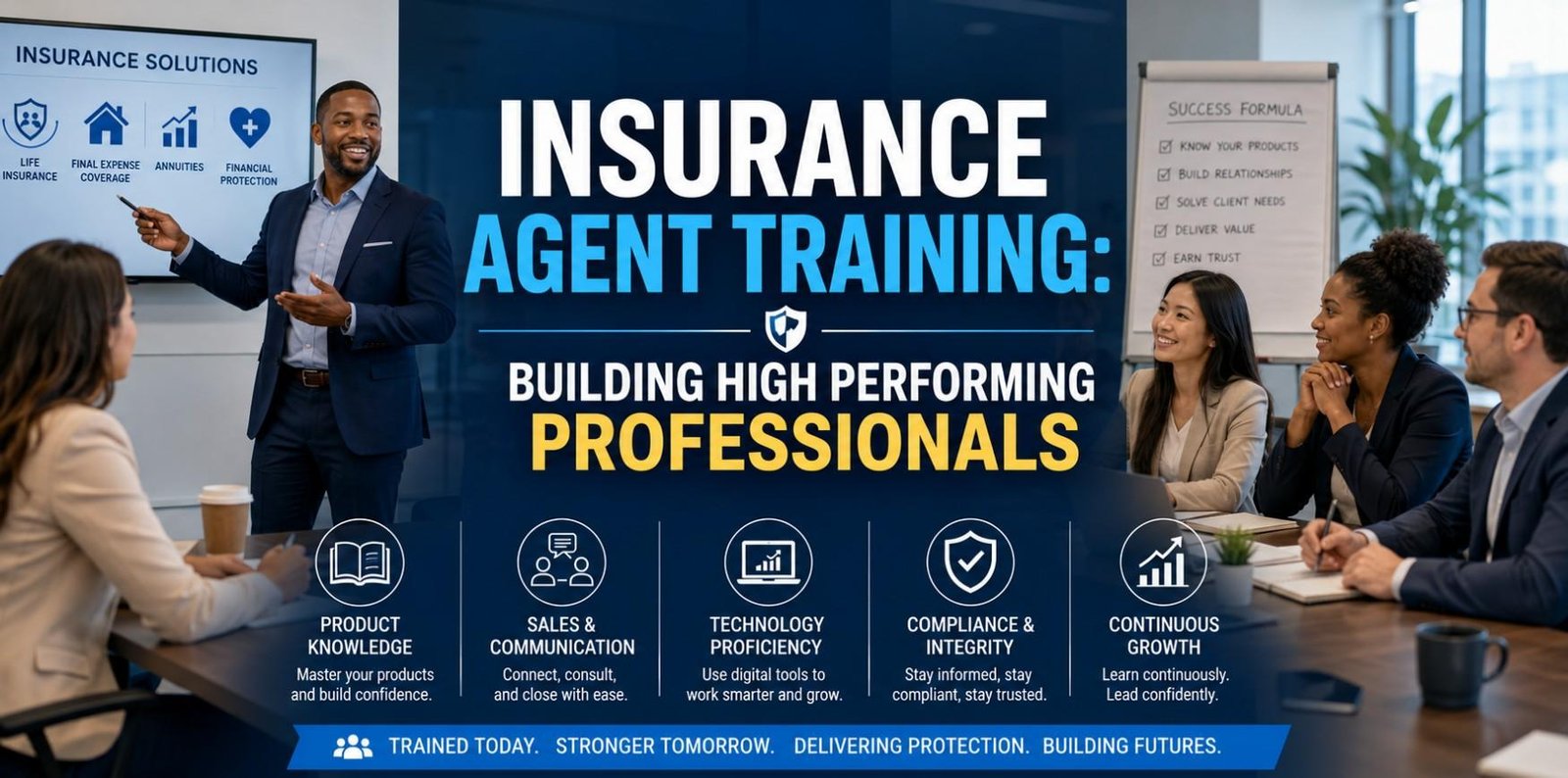
The insurance industry continues to evolve at a rapid pace. Customer expectations are changing, technology is reshaping sales processes, and competition is increasing across every insurance segment. In this environment, insurance agent training is no longer a one time onboarding activity. It has become a strategic investment that directly impacts sales performance, customer satisfaction, compliance, and long term business growth.
Organizations that prioritize comprehensive training programs consistently develop agents who are more confident, productive, and capable of delivering exceptional client experiences. Whether an agency focuses on life insurance, final expense coverage, annuities, or broader financial products, a strong training foundation creates a clear pathway to sustainable success.
Why Insurance Agent Training Matters
Insurance agents serve as the bridge between complex insurance products and consumers seeking financial protection. Without proper training, agents may struggle to explain policy options, handle objections, or build trust with prospective clients.
Effective insurance agent training equips professionals with the knowledge and skills necessary to navigate real world sales situations. It helps agents understand products thoroughly, communicate value effectively, and provide solutions tailored to each client's needs.
Beyond sales performance, training also supports regulatory compliance. Insurance regulations frequently change, and agencies must ensure their teams remain informed and compliant. A well trained workforce reduces risk while strengthening the company's reputation.
Key Components of a Successful Insurance Agent Training Program
Modern insurance training should go far beyond product presentations and licensing preparation. The most successful programs incorporate multiple areas of professional development.
Product Knowledge Mastery
Agents must possess a deep understanding of the products they sell. This includes policy features, underwriting requirements, eligibility guidelines, premium structures, and policy benefits.
When agents fully understand their offerings, they can confidently address client concerns and recommend suitable solutions. This level of expertise helps establish credibility and strengthens customer relationships.
Sales Skills Development
Even the best insurance products require effective communication. Sales training should focus on:
• Prospecting and lead management
• Building rapport with clients
• Conducting needs based consultations
• Handling objections professionally
• Closing sales with confidence
• Following up consistently
These skills help agents move prospects through the sales process while maintaining a client focused approach.
Communication and Relationship Building
Trust remains one of the most important factors in insurance sales. Agents who communicate clearly and authentically are more likely to build lasting relationships with clients.
Training should include active listening techniques, emotional intelligence, customer service strategies, and methods for simplifying complex insurance concepts. Strong communication creates a positive customer experience that can lead to referrals and repeat business.
Technology and Digital Sales Training
The insurance industry has embraced digital transformation. Agents now rely on customer relationship management systems, virtual meeting platforms, electronic applications, and digital marketing tools.
Training programs should help agents become comfortable using technology to improve efficiency and reach a wider audience. Digital proficiency allows agents to adapt to changing consumer preferences and remain competitive in today's marketplace.
The Role of Continuous Learning
One of the biggest mistakes agencies make is treating training as a single event. The most successful insurance organizations create cultures of continuous learning.
Ongoing education keeps agents updated on industry trends, new products, regulatory changes, and evolving customer expectations. Regular coaching sessions, workshops, role playing exercises, and mentorship opportunities help reinforce skills while encouraging professional growth.
Continuous learning also boosts agent confidence. When professionals feel supported and equipped with current knowledge, they are more likely to perform at a higher level.
How Training Impacts Agency Growth
Insurance agent training delivers benefits that extend beyond individual performance. It directly contributes to overall agency success.
Well trained agents typically generate higher sales volumes because they understand how to identify opportunities and communicate value effectively. They also tend to have stronger client retention rates, which increases long term revenue.
Additionally, structured training programs can improve recruitment and retention efforts. New agents are more likely to stay with organizations that invest in their development and provide clear pathways for career advancement.
As agencies scale, a standardized training system ensures consistency across teams. This consistency helps maintain service quality, compliance standards, and organizational culture.
Best Practices for Insurance Training Programs
To maximize effectiveness, agencies should design training programs that combine education with practical application.
Successful strategies include:
• Interactive learning experiences rather than passive presentations
• Real world sales scenarios and role playing exercises
• Mentorship from experienced professionals
• Performance tracking and regular feedback
• Access to ongoing educational resources
• Clear development goals and milestones
By combining theory with hands on experience, agencies create learning environments that drive measurable results.
Preparing Agents for the Future
The future of insurance belongs to professionals who can adapt quickly, embrace technology, and build meaningful client relationships. Insurance agent training plays a critical role in preparing teams for these challenges.
Organizations that invest in comprehensive training create stronger sales cultures, develop future leaders, and position themselves for sustainable growth. As competition continues to intensify, training will remain one of the most valuable investments an insurance agency can make.
Frequently Asked Questions
What is insurance agent training?
Insurance agent training is a structured program designed to help agents develop product knowledge, sales skills, compliance awareness, communication abilities, and industry expertise required to succeed in the insurance business.
Why is ongoing training important for insurance agents?
Ongoing training keeps agents updated on industry changes, improves sales performance, strengthens compliance, and helps professionals adapt to evolving customer expectations and technology.
How does insurance agent training improve sales performance?
Training enhances product knowledge, objection handling, prospecting techniques, communication skills, and closing strategies, enabling agents to serve clients more effectively and generate better results.
What should a modern insurance training program include?
A modern program should include product education, sales development, technology training, compliance instruction, customer relationship management skills, mentorship, and continuous learning opportunities.

 Arabic
 French
 Spanish
 Portuguese
 Deutsch
 Turkish
 Dutch
Dutch
 Italiano
 Russian
 Romaian
 Portuguese (Brazil)
 Greek
Greek