


Contactless Smart Card Market Analysis Reveals Shifting Strategic Priorities
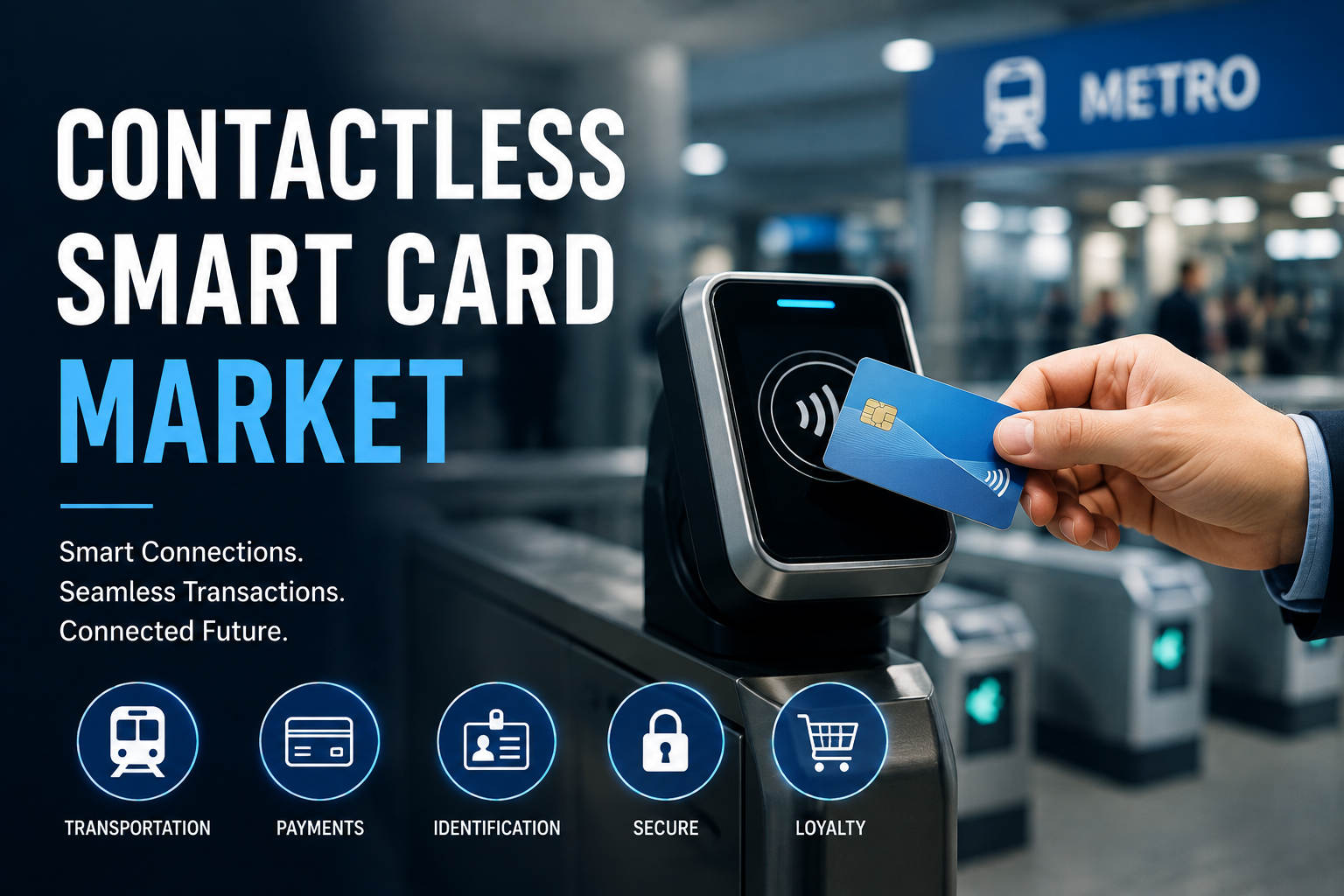
The Contactless Smart Card Market Analysis reveals a sector at a strategic pivot, where adoption drivers are shifting from basic convenience to comprehensive, multi-application security infrastructure. A core finding is the growing recognition of contactless smart cards as a foundational layer for secure identity, access, and payment across physical and digital domains. Organizations are moving beyond single-application cards to deploy multi-functional platforms that combine access control, payment, and identity verification capabilities.
A critical finding is the dominant role of the banking and payment sector as the largest application segment, driven by the ongoing EMV migration and the issuance of dual-interface contactless payment cards . Government identification and transit applications represent significant growth segments, with countries worldwide modernizing national identity infrastructure through eID and ePassport programs . Corporate access control is another key application, as enterprises upgrade from traditional proximity systems to encrypted credentials. The analysis highlights that the replacement of magnetic stripe and legacy proximity systems with encrypted, interoperable credentials is a key driver across banking, government, and corporate sectors.
The analysis also highlights the intensifying focus on interoperability, secure credential lifecycle management, and certified secure elements as critical priorities. The market is increasingly defined by interoperability across payment networks, transit systems, and identity programs, requiring adherence to global specifications such as ISO/IEC 14443, NFC Forum standards, EMV contactless payment specifications, and ICAO ePassport requirements . The challenge of ensuring secure credential lifecycle management across issuance, usage, and retirement is a key consideration. The need for certified secure elements to protect cryptographic keys and biometric data is also a priority.
Looking forward, the market analysis projects sustained growth with a strong emphasis on integration, interoperability, and AI-enhanced security. The future of contactless smart cards lies in platforms that can seamlessly integrate with mobile wallets, biometrics, and cloud-based credential management while maintaining robust security and interoperability. As contactless technology continues to converge with digital identity and payment ecosystems, the market will remain central to secure authentication strategies.
Top Trending Reports

 Arabic
 French
 Spanish
 Portuguese
 Deutsch
 Turkish
 Dutch
Dutch
 Italiano
 Russian
 Romaian
 Portuguese (Brazil)
 Greek
Greek