


Do You Need Fire Sprinklers in Your UK Home? A Homeowner’s Practical Guide
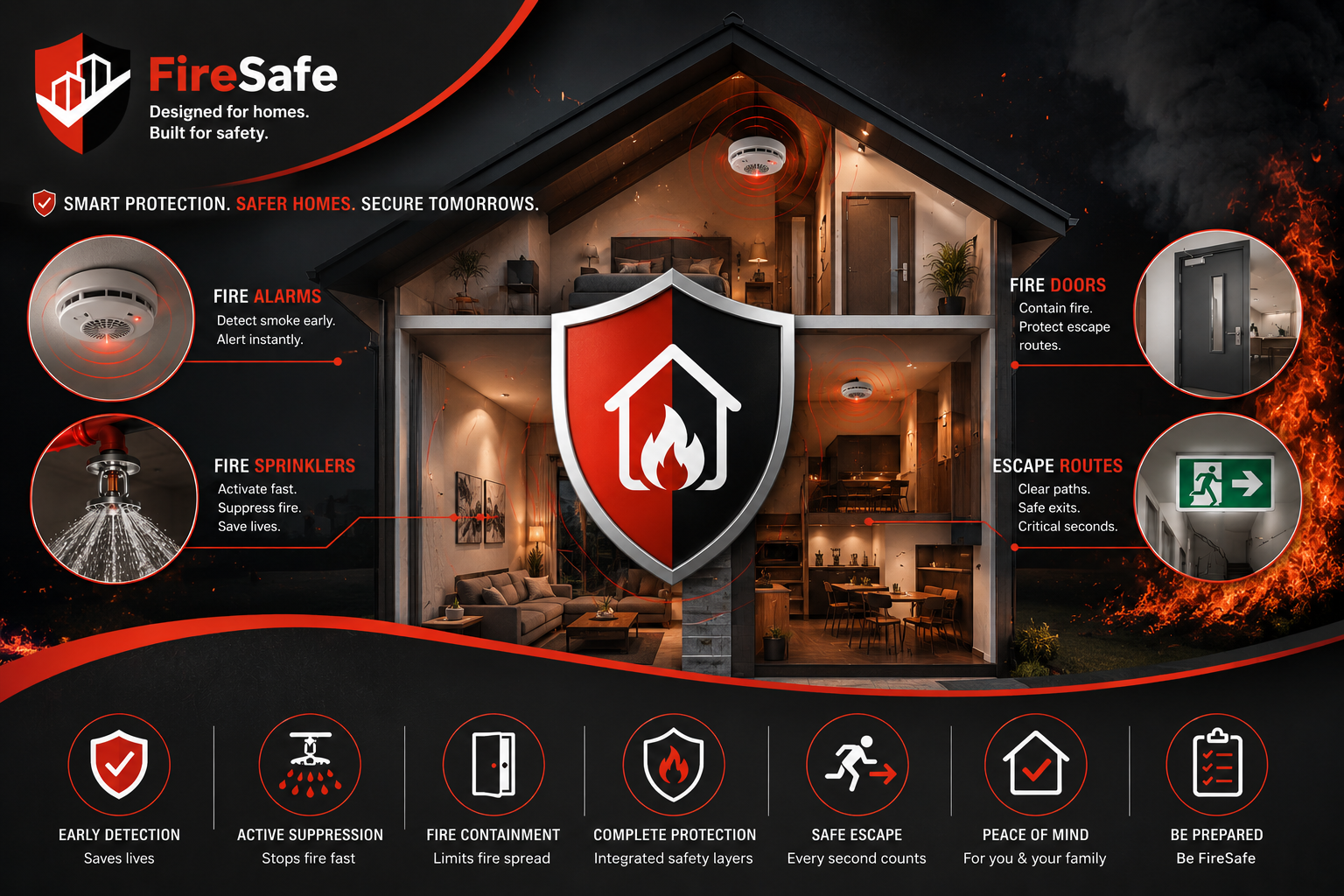
When homeowners think about fire protection, smoke alarms are usually the first thing that comes to mind. They are familiar, widely used and an essential part of keeping a household safe. However, alarms are designed to warn you about a fire, not to control the fire itself.
That raises an important question for homeowners planning a renovation, extension, loft conversion or new-build property: Do you need fire sprinklers in your UK home?
There is no single answer for every property. Your home's design, construction, occupants and planned alterations can all influence the most suitable approach. However, residential sprinklers can provide an additional layer of protection that is worth considering alongside alarms, fire doors and safe escape routes.
What Do Fire Sprinklers Do?
A residential sprinkler system is designed to respond to heat from a developing fire.
This makes sprinklers different from smoke alarms. An alarm detects smoke and provides an audible warning, giving occupants an opportunity to react and escape. A sprinkler system is designed to discharge water at the location where sufficient heat has developed, helping to control or suppress the fire.
Importantly, residential sprinkler systems are not designed to spray every room simultaneously when a fire occurs. Individual sprinkler heads respond to the heat around them, meaning the system can target the area affected by the fire.
For homeowners, this provides an important distinction: an alarm tells you there is a problem, while a sprinkler can actively respond to the fire itself.
Does Every UK Home Need Sprinklers?
Not necessarily.
Fire-safety requirements can depend on the property, its construction, the type of building work being undertaken and the relevant regulations and guidance. A homeowner should therefore avoid assuming that sprinklers are either compulsory for every property or unnecessary simply because an existing house does not have them.
They can, however, be particularly worth discussing when a property is being substantially altered.
For example, changing the internal layout, creating additional accommodation or extending a house can affect escape routes and the way fire could travel through the building. Considering fire protection during the design stage can make it easier to create a more coordinated solution.
Which Homes Could Benefit From Sprinklers?
There are several situations where homeowners may want to consider additional active fire protection.
Open-plan homes
Open-plan kitchens and living areas are increasingly popular, but removing internal divisions can change the way heat and smoke could move through a property.
Sprinklers can form part of a wider strategy for controlling a developing fire, particularly where an open layout creates larger connected spaces.
Loft conversions
Converting a loft into a bedroom, office or living area can significantly change a home's fire-safety considerations.
The new accommodation may affect escape arrangements, particularly where occupants need to travel through other parts of the property to reach safety. Fire doors, alarms, escape routes and suppression measures may all need to be considered together.
Extensions and major renovations
A new extension can introduce additional rooms, altered doorways and different routes through the property.
Planning fire protection before work begins allows homeowners and professionals to consider these changes as part of the overall design rather than trying to solve problems after construction has finished.
Homes with vulnerable occupants
Some occupants may require more time to recognise a fire, respond to an alarm or reach a place of safety. Young children, older people and anyone with reduced mobility can make early fire control particularly valuable.
Sprinklers cannot replace a suitable escape plan, but they can provide another layer of protection while occupants respond.
Sprinklers Do Not Replace Fire Alarms
One common misunderstanding is that installing sprinklers means smoke alarms are no longer necessary.
The two systems perform different jobs.
Smoke alarms provide early warning. Fire doors can help limit the spread of fire and smoke between areas. Sprinklers can respond directly to heat and help control a developing fire.
Used together, these measures create a layered approach to residential fire protection.
That is far more effective than relying on one product to deal with every aspect of a fire emergency.
What About Water Damage?
Water damage is a reasonable concern when considering sprinklers.
However, residential sprinkler systems are designed to operate in response to heat rather than simply because smoke has been detected. A properly designed system does not normally activate every sprinkler head throughout the property when a fire begins in one room.
This is another reason professional design is important. The system needs to suit the property, its layout, water supply and intended level of protection.
Should You Consider Sprinklers During a Renovation?
If you are already planning significant work, it is sensible to discuss fire protection before construction begins.
Installing pipework and equipment during a renovation can be more straightforward than attempting to retrofit a system after ceilings and finishes have been completed.
Whether you are converting a loft, extending your kitchen or redesigning your home, early planning gives you the opportunity to consider firesafe sprinkler systems alongside alarms, fire doors and escape arrangements.
Making the Right Choice for Your Home
There is no universal fire-safety solution for every UK property. A modern detached house, Victorian terrace, flat or heavily altered home can each present different considerations.
The best starting point is to look at the property as a whole rather than choosing individual products in isolation.
FireSafe Residential can help homeowners understand how different layers of protection can work together to create a more considered residential fire-safety strategy.
The question is therefore not simply whether your home “needs” sprinklers. It is whether adding another layer of active fire protection could make your property safer, particularly when you are already changing its layout or construction.
For many homeowners, that is a conversation worth having before the work begins.
Original source : https://worldschoolface.com/index.php/blog/138759/fire-alarm-fire-door-or-sprinkler-understanding-the-layers-of-home-fire-pro/
 Deutsch
 English
 Arabic
 French
 Spanish
 Portuguese
 Turkish
 Dutch
Dutch
 Italiano
 Russian
 Romaian
 Portuguese (Brazil)
 Greek
Greek