


Bacteriostatic Water vs. Sterile Water - They Are Not Interchangeable
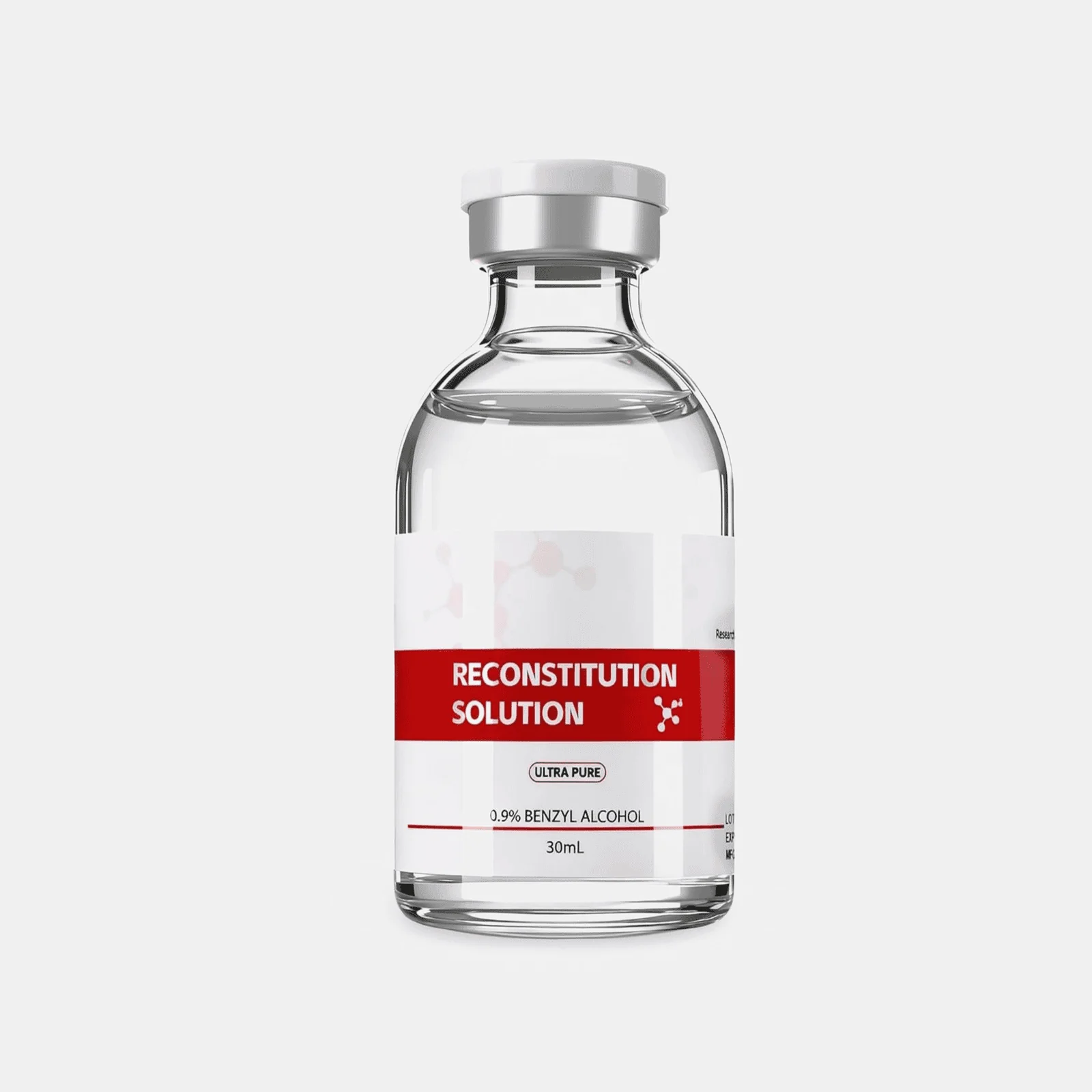
Choosing the wrong reconstitution solvent is one of the most common errors in peptide research, and it rarely announces itself. The solution looks identical in both cases; the peptide dissolves either way, but what happens over the next 24 to 28 days is completely different. That difference shows up in your data. Researchers sourcing BAC water in Canada for peptide work need to understand exactly what separates these two solvents before reconstituting a single vial.
Same Starting Point, Completely Different Purpose
Both bacteriostatic water and sterile water for injection start from the same base, water that has been purified and sterilized to remove microbial contaminants. That's where the similarity ends. Sterile water contains nothing else. It is a single-use solvent that does not protect against microbial growth once the vial has been opened. Bacteriostatic water contains 0.9% benzyl alcohol.
That additive is the entire point. Benzyl alcohol is a bacteriostatic agent, meaning it prevents bacteria from reproducing inside the solution. It doesn't sterilize the water again after contamination enters, but it creates an environment where microorganisms cannot establish and multiply. For a vial that will be accessed multiple times across a research protocol, that distinction is everything.
The practical result is that sterile water gives you one access. Use it, and any remaining solution should be discarded. Bacteriostatic water gives you up to 28 days of usable solution after the first puncture, provided the vial is stored correctly and handled each time aseptically.
Why Single-Use Matters More Than Most Labs Acknowledge
Sterile water is appropriate when a reconstituted solution is consumed entirely in one session. The problem arises when labs use it for peptides they plan to access repeatedly. Each subsequent puncture introduces contaminants into a solution with no defense against them. Bacterial growth doesn't always produce visible cloudiness or odor, so contamination can be biologically active long before any obvious sign appears, quietly compromising an experiment that the researcher doesn't know is already off track.
What Benzyl Alcohol Does, and the Limits Researchers Should Know
Benzyl alcohol at 0.9% prevents microbial growth effectively across a 28-day storage window. It does not denature peptide bonds or precipitate most sequences at standard research concentrations. What it doesn't do is protect against chemical degradation, oxidation, or freeze-thaw damage. Those processes depend on temperature, light, and container choice. Bacteriostatic water for peptide reconstitution extends microbiological stability specifically. Everything else still requires proper cold storage and handling discipline.
Solvent Choice by Protocol Type
Matching solvent to protocol is straightforward once the logic is clear:
-
Single-use, immediately consumed solution: Sterile water is appropriate. Multi-dose stability is irrelevant.
-
Multi-dose stock accessed over days or weeks: Bacteriostatic water is the correct choice. The 28-day window and microbial inhibition justify it.
-
Peptides with limited solubility: Use 0.1% acetic acid first to aid dissolution, then bring to final volume with bacteriostatic water.
-
Cell-based assays at high peptide concentrations: Confirm benzyl alcohol tolerance for your specific assay format before proceeding.
The Labelling Problem Labs Consistently Overlook
Choosing the right solvent is step one. Tracking usage after that point is step two, and it's where many labs fall short. A vial of bacteriostatic water for peptide reconstitution that has been opened but not labelled with the date of first puncture creates an invisible variable. Researchers working with that vial two or three weeks later have no reliable way to know how much of the 28-day window has passed.
The fix is simple but needs to be a formal lab practice rather than an informal habit. Label every vial at the moment of first use. Record the date, the peptide reconstituted in that session, the concentration, and the storage location. If a vial passes its 28-day window mid-experiment, that's a protocol consideration that needs to be planned for rather than discovered after the fact.
Storage conditions for the opened vial also matter. Refrigeration at 2°C to 8°C after first use slows any residual degradation processes and supports the benzyl alcohol's effectiveness across the usable period. Room temperature storage after opening shortens the effective window even within the 28-day guideline.
The Right Solvent Is a Research Decision, Not a Supply Decision
Labs sometimes default to whichever solvent is available rather than which one the protocol actually requires. That approach treats reconstitution as a logistical step rather than a scientific one, and it introduces a variable that can compromise data integrity without ever appearing in the methods section.
Researchers who understand the functional difference between bacteriostatic and sterile water make a deliberate choice for every protocol they run. That choice, matched correctly to the access pattern and duration of each experiment, is part of what separates reproducible science from results that don't hold up across repeated runs. For labs working with peptides that require consistent, multi-dose reconstituted solutions, having the right solvent stocked and correctly labelled is as fundamental as having the peptide itself.
Sourcing quality bacteriostatic water in Canada for lab use should follow the same verification standards applied to any other research-grade compound, pharmaceutical-grade formulation, clear documentation, and known benzyl alcohol concentration.
Stock the Right Tool Before You Start
The choice between bacteriostatic water and sterile water determines how long your reconstituted solution stays usable, how many times you can access it safely, and how much confidence you can place in your stock between sessions. Make that choice before the vial opens, not after the data looks inconsistent.
Sourcing quality bacteriostatic water in Canada should follow the same verification standards applied to any research-grade compound, pharmaceutical-grade formulation, clear documentation, and confirmed benzyl alcohol concentration.

 English
 Arabic
 French
 Spanish
 Portuguese
 Deutsch
 Turkish
 Dutch
Dutch
 Italiano
 Russian
 Portuguese (Brazil)
 Greek
Greek