


Proven Strategies to Revise Your Manuscript After Peer Review
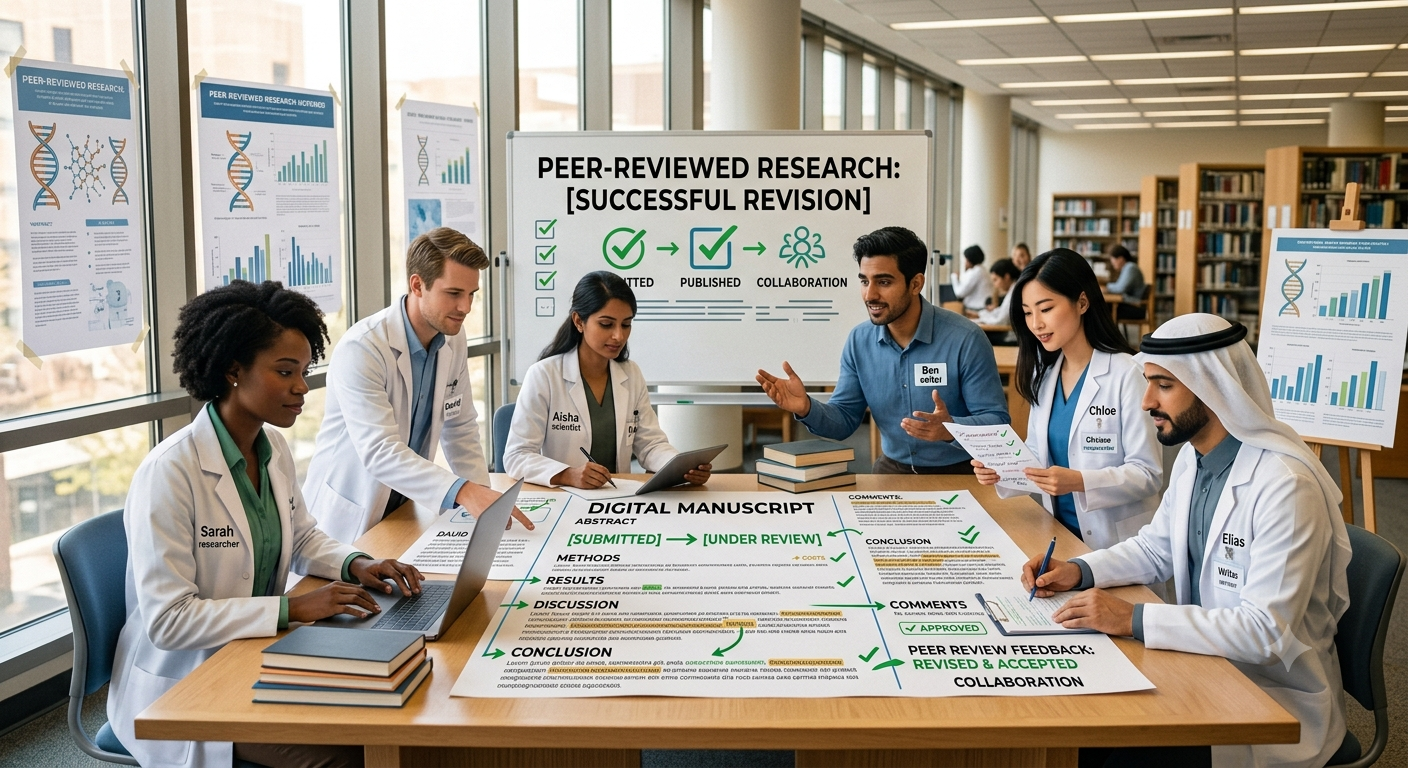
Revise and Resubmit is the academic equivalent of a second chance, a golden opportunity to elevate your research from a promising draft to a published contribution. However, transforming a manuscript based on rigorous peer review feedback is less about simply fixing errors and more about strategic engagement with critical insights. As an experienced academic publishing consultant, I've guided countless researchers, from postgraduate students in the UAE to seasoned faculty globally, through this pivotal stage. The goal isn't just to address comments; it's to demonstrate mastery, enhance your research paper, and ultimately, secure publication. This article offers expert reviewer comment support, providing actionable strategies to navigate the complexities of manuscript revision, ensuring your work shines.
The R.E.A.C.T. Framework for Interpretation
Before a single word is changed in your research manuscript, a critical first step is to thoroughly understand the feedback. Many authors jump directly into revisions, often misinterpreting or misprioritizing comments. This can lead to wasted effort or, worse, new issues. I propose the R.E.A.C.T. Framework—a systematic approach to interpret reviewer feedback effectively, forming the bedrock of successful peer review revision support.
R: Read, Reflect, and Resist Immediate Reaction
The initial read-through of reviewer comments can be emotionally charged. It's natural to feel defensive, frustrated, or even disheartened, especially if the feedback is critical or perceived as unfair. This is precisely why immediate reaction is detrimental. Instead, read all comments once, then set them aside for at least 24 hours. This allows for emotional distance and a clearer, more objective perspective. Your goal is to understand the intent behind the feedback, not just the surface-level critique.
E: Evaluate for Clarity and Actionability
Not all comments are created equal. Some are clear, direct, and immediately actionable (The sample size calculation needs more detail). Others can be vague, subjective, or even contradictory (Your theoretical framework is too broad, but also lacks depth). Evaluate each comment: Is it specific enough to act on? If not, can you infer the underlying concern? For instance, a vague improve flow might point to structural issues or unclear transitions. This evaluation phase is crucial for effective reviewer comments assistance.
A: Analyze for Consistency and Contradiction
Pay close attention to where reviewers agree or disagree. Consensus among reviewers on a particular point (e.g., The methodology section requires more detail) signals a high-priority revision. Contradictory comments (e.g., Reviewer 1 wants more discussion of X, while Reviewer 2 suggests shortening the discussion) require careful strategic thinking. Here, the journal editor's perspective often becomes paramount. Identifying these patterns helps you anticipate the editor's likely expectations.
C: Categorize for Prioritization
Once you've interpreted the comments, categorize them. I typically recommend categories like:
* Major Revisions: Fundamental changes to methodology, results interpretation, or theoretical framework.
* Minor Revisions: Clarity improvements, additional explanations, minor data re-analysis.
* Stylistic/Grammatical: Language editing, formatting, typos.
* Optional/Debatable: Suggestions that might not align with your core argument or are subjective.
This categorization lays the groundwork for your revision plan, a critical step in journal manuscript improvement.
T: Target the 'Why' Behind the Comment
Beyond what the reviewer says, consider why they are saying it. Is a comment about insufficient literature review actually a concern about the novelty of your work? Is a request for more discussion really about strengthening your arguments or linking findings to broader implications? Understanding the underlying rationale helps you address the root cause, not just the symptom. This deeper analysis is a hallmark of truly effective expert reviewer comment support in the UAE.
The 3-Tiered Prioritization Matrix
With your reviewer comments thoroughly decoded, the next challenge is to manage the revision workload efficiently and strategically. Simply tackling comments in the order they appear can be inefficient and lead to a disjointed final manuscript. My 3-Tiered Revision Prioritization Matrix offers a structured approach to ensure your efforts yield maximum impact and improve your publication success rate.
Tier 1: Non-Negotiable Revisions (Clarity, Data Integrity, Ethics)
These are the absolute must-dos. They often relate to the core integrity, clarity, or ethical soundness of your research. Failure to address these adequately will almost certainly lead to rejection. Examples include:
* Data Integrity: Errors in statistical analysis, misrepresentation of results, or missing data.
* Methodological Flaws: Significant gaps in experimental design, sampling, or data collection.
* Ethical Concerns: Issues with informed consent, participant anonymity, or research misconduct.
* Fundamental Clarity: Sections that are genuinely incomprehensible or logically flawed.
Prioritize these revisions first. They are the foundation upon which your entire manuscript rests.
Tier 2: High-Impact Enhancements (Methodology, Argument Strength, Novelty)
Once Tier 1 issues are resolved, focus on changes that significantly strengthen your paper's scientific contribution and persuasiveness. These often involve expanding on existing sections, refining arguments, or providing additional context.
* Strengthening Arguments: Providing more evidence, clearer reasoning, or better justification for your claims.
* Enhancing Novelty: Articulating the unique contribution of your research more explicitly.
* Methodological Detail: Adding necessary specifics to allow for replication or deeper understanding.
* Literature Integration: Updating or expanding the literature review to better contextualize your work.
These revisions directly address the intellectual merit and impact of your research, crucial for academic publishing.
Tier 3: Minor Adjustments and Stylistic Refinements (Grammar, Formatting)
These are the final polish. While important for professionalism and readability, they should only be addressed after all substantive revisions are complete.
Language Editing: Grammar, syntax, punctuation, and overall English clarity. This is where professional academic editing services* can be invaluable, especially for non-native English speakers.
* Formatting: Adherence to journal guidelines, citation formatting, figure/table presentation.
* Clarity of Expression: Refining sentences for conciseness and flow.
Balancing Reviewer Desires with Authorial Vision
A common pitfall is to implement every single reviewer suggestion, even if it compromises your original thesis or introduces new flaws. Remember, you are the expert on your own research. While you must address all comments, you don't always have to agree with every proposed solution. If a reviewer's suggestion fundamentally misinterprets your work or would weaken it, you can respectfully explain why you chose a different approach (or why the suggestion isn't applicable) in your response letter. This balance is a nuanced aspect of effective peer review revision support.
Crafting the Winning Response Letter
The response letter is arguably as important as the revised manuscript itself. It's your opportunity to engage in a professional dialogue with the editor and reviewers, demonstrating that you've diligently addressed their concerns and significantly improved your research paper. A well-crafted response letter can be the difference between acceptance and further revisions, or even rejection.
The Anatomy of a Persuasive Response Letter
Your response letter should be meticulously structured and professional. Here’s a recommended anatomy:
1. Polite Opening: Thank the editor and reviewers for their time and valuable feedback. Reiterate the manuscript title and submission ID.
2. General Summary of Revisions: Briefly highlight the major changes made to the manuscript in response to the feedback. This sets a positive tone and showcases your thoroughness.
3. Point-by-Point Response: This is the core. Address every single comment from every reviewer individually.
* Quote the original comment: Copy-paste the exact comment for clarity.
* State your action: Clearly explain how you addressed the comment. We agree with the reviewer's suggestion and have revised... or We appreciate this insightful comment and have incorporated X change on page Y, lines Z-Z.
* Provide evidence: Refer to specific page and line numbers in the revised manuscript where the changes can be found.
* Justify your decisions: If you chose not to implement a suggestion, politely and professionally explain your reasoning, maintaining a respectful tone.
1. Specific Changes to Manuscript: Optionally, you can include a list of minor changes not directly tied to a reviewer comment (e.g., updated references, minor stylistic edits).
2. Concluding Remarks: Reiterate your gratitude and express your hope that the revisions meet their expectations.
The Art of Constructive Disagreement
Some comments are difficult. They might be based on a misunderstanding, contradict other feedback, or suggest changes that undermine your core argument. Here's how to handle them:
* Acknowledge and Validate: Even if you disagree, acknowledge the reviewer's perspective. We understand the reviewer's concern regarding...
Provide a Rationale: Clearly explain why* you've taken a particular stance or chosen not to implement a suggestion. Use evidence, logical reasoning, or reference your study's scope. While we appreciate the suggestion to include X, our study's scope was limited to Y due to Z constraints, as now clarified on page A, lines B-B.
* Offer an Alternative: If possible, propose an alternative solution that addresses the underlying concern without compromising your work. For example, instead of adding a new experiment, you might add a paragraph to the discussion acknowledging the limitation.
Maintain Professionalism: Never become defensive or accusatory. Your tone must remain respectful and academic. This is where reviewer comments assistance* from experts can be incredibly beneficial, helping you frame difficult responses diplomatically.
Leveraging the Cover Letter for Resubmission
When resubmitting, your cover letter isn't just a formality; it's a strategic tool. Beyond the standard components, highlight:
* Key Improvements: Briefly summarize the most significant revisions made in response to peer review.
* Impact of Revisions: Emphasize how these changes have strengthened the manuscript's clarity, rigor, and overall contribution.
* Editor's Role: Acknowledge any specific guidance the editor provided and how you've addressed it.
This proactive approach helps pre-sell your revised manuscript and the detailed response letter, nudging the editor towards a positive decision.
Common Mistakes in Response Letters and How to Avoid Them
* Not Addressing Every Comment: This is a cardinal sin. Even if you disagree, you must acknowledge and explain your decision for every single point.
* Defensive or Aggressive Tone: This immediately erodes trust and makes the editor and reviewers less receptive to your arguments.
Vague Responses: We have addressed this is insufficient. Explain how and where*.
* Introducing New Issues: Be careful that your revisions don't inadvertently create new errors or inconsistencies.
* Lack of Proofreading: A poorly written response letter undermines your credibility. Treat it with the same rigor as your manuscript.
The Strategic Resubmission Playbook
While Revise and Resubmit is the desired outcome, sometimes an editorial decision is outright rejection. This can be disheartening, but it's not the end of your publication journey. Many successful papers started as rejections. The key is to view rejection as constructive feedback, an opportunity for further journal manuscript improvement and a strategic pivot.
Understanding the 'Why' Behind Rejection (and What to Do About It)
Rejections aren't always about your research being bad. Common reasons include:
* Out of Scope: The journal's focus wasn't a good fit.
* Methodological Flaws: Significant issues that couldn't be resolved with revision.
* Lack of Novelty/Impact: The research didn't offer a sufficiently new or important contribution for that specific journal.
* Poor Presentation: Even good research can be rejected if it's poorly written or structured.
Carefully read the rejection letter and reviewer comments (if provided). Identify the core reasons. If the issue is scope, target a more appropriate journal. If it's methodological, address those flaws rigorously.
When to Resubmit to the Same Journal vs. Target a New One
Resubmit to the Same Journal (Rarely): Only consider this if the editor explicitly invited a resubmission after major* revisions, or if the rejection was primarily due to a misunderstanding that can be easily rectified. This is uncommon.
* Target a New Journal (Most Common): This allows you to leverage the peer review feedback to improve your manuscript for a fresh submission. You'll often find a better fit for your work.
A Systematic Approach to Post-Rejection Revision
1. Decompress and Detach: Give yourself time to process the rejection before diving into revisions.
2. Analyze Feedback: Treat the rejection comments with the same R.E.A.C.T. Framework as you would for a revise and resubmit.
3. Revise Systematically: Implement the necessary changes, potentially more extensively than for a revise and resubmit to truly elevate the manuscript.
4. Re-evaluate Target Journals: Based on the feedback, consider journals with a different scope, impact factor, or audience that might be a better fit.
5. Craft a New Cover Letter: Tailor it specifically for the new journal, highlighting the improved manuscript and its relevance to their aims and scope. Do not mention the previous rejection unless explicitly asked.
The Role of Academic Editing Services in Rejection Recovery
Facing rejection can be isolating. This is where professional academic editing services and research publication assistance become invaluable. Experts can provide an objective assessment of your manuscript, identify weaknesses missed by previous reviewers, and help you strategically position your paper for a new target journal. They offer a fresh pair of eyes and deep knowledge of publication standards, significantly increasing your chances of publication success.
Elevating Your Manuscript to Publication Readiness
The revision process isn't just about fixing what's broken; it's about elevating your manuscript to its highest possible quality. Achieving true publication readiness goes beyond simply addressing reviewer comments. It involves a holistic approach to scientific writing, research integrity, and presentation.
The Publication Readiness Checklist
Before hitting that submit button, run through a comprehensive checklist:
* All Reviewer Comments Addressed: Every single point from the original feedback has been explicitly addressed in the revised manuscript and detailed in the response letter.
* Response Letter Clarity: The response letter is clear, concise, professional, and provides specific page/line numbers for all changes.
* Manuscript Coherence: The revised manuscript flows logically, and the changes haven't introduced new inconsistencies or fragmented the narrative.
* Language and Grammar: The writing is clear, concise, and free of grammatical errors, typos, and awkward phrasing. (Consider professional language editing here).
Journal Guidelines: * All formatting (references, figures, tables, headings) strictly adheres to the target journal's latest guidelines.
* Ethical Compliance: All ethical considerations (e.g., informed consent, data privacy, authorship) are clearly documented and compliant.
* Figures and Tables: Are they high-resolution, accurately labeled, and understandable independently?
* Abstract and Keywords: Do they accurately reflect the revised content and effectively summarize the paper's contribution?
This checklist ensures your manuscript is polished and robust, a testament to effective journal manuscript improvement.
Ethical Considerations in Manuscript Revision and Response
Maintaining research integrity is paramount throughout the revision process.
* Honest Responses: Always be truthful in your response letter. Do not claim to have made changes you haven't.
* Data Integrity: Do not manipulate data to fit reviewer suggestions. If new analyses are performed, ensure they are scientifically sound and transparently reported.
* Authorship: Ensure all contributors to the revisions are appropriately acknowledged or added as co-authors if their contribution merits it.
* Plagiarism: Recheck for unintentional plagiarism, especially if you've rephrased sections.
The Value of Expert Manuscript Editing Experts and Journal Resubmission Support
The journey from initial submission to final acceptance is often arduous. Navigating complex reviewer feedback, crafting persuasive response letters, and ensuring your manuscript meets the highest standards of academic rigor can be overwhelming. This is where manuscript editing experts and journal resubmission support services, like those offered by Harvard Publication Hub, become invaluable. Our team provides comprehensive expert reviewer comment support, transforming your revised manuscript into a compelling, publication-ready submission. We offer objective feedback, meticulous language editing, and strategic guidance to maximize your chances of acceptance, ensuring your research makes the impact it deserves.
The revision stage is not merely a hurdle; it's an opportunity for profound improvement. By embracing a strategic, structured approach—from decoding feedback with the R.E.A.C.T. Framework to prioritizing revisions with the 3-Tiered Matrix, and crafting an impeccable response letter—you significantly increase your chances of publication success. Remember, every revise and resubmit is a testament to the potential of your work. Approach it with diligence, strategic thinking, and if needed, the support of seasoned publication support services, and watch your research flourish in the academic landscape.
 Portuguese
 English
 Arabic
 French
 Spanish
 Deutsch
 Turkish
 Dutch
Dutch
 Italiano
 Russian
 Romaian
 Portuguese (Brazil)
 Greek
Greek