


The Unbreakable Shield: An In-Depth Exploration of the Global Data Encryption Industry
In today's hyper-connected world, data has become the most valuable asset for organizations and individuals alike, but this value also makes it a prime target for malicious actors. The process of converting data into a coded format to prevent unauthorized access has evolved from a niche military application into a fundamental pillar of modern cybersecurity. This critical need has spawned the global Data Encryption industry, a vast and dynamic sector dedicated to developing the software, hardware, and services that protect sensitive information. This industry provides the essential tools that secure everything from personal financial records and confidential corporate strategies to national security secrets. As digital transformation accelerates and the volume of data generated explodes, the reliance on robust encryption has become non-negotiable. It is the invisible shield that underpins e-commerce, enables secure cloud computing, and preserves privacy in an age of constant surveillance. The industry is not just about security; it is about enabling trust, which is the bedrock upon which the entire digital economy is built. Without the confidence that data encryption provides, the free flow of information that powers our modern world would grind to a halt, making this industry one of the most critical of our time.
Core Principles of Cryptography
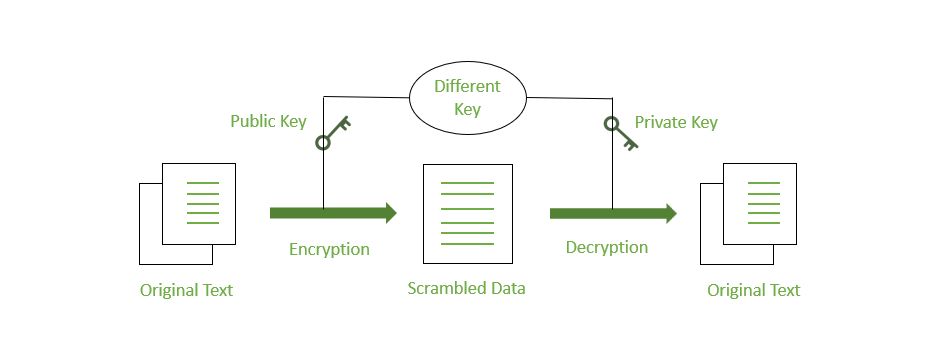
At the heart of the data encryption industry lie the core principles of cryptography, the science of secure communication. The two primary methods are symmetric and asymmetric encryption. Symmetric encryption, the older and faster of the two, uses a single secret key for both encrypting the plaintext and decrypting the ciphertext. Its strength lies in its speed, making it ideal for encrypting large volumes of data, such as entire hard drives or large databases. However, its main challenge is secure key distribution; both the sender and receiver must have the same key, and transmitting it securely can be a vulnerability. Asymmetric encryption, also known as public-key cryptography, solves this problem by using a pair of keys: a public key, which can be shared freely, and a private key, which is kept secret. Data encrypted with the public key can only be decrypted with the corresponding private key. This method, while slower than symmetric encryption, is the foundation for secure communication over the internet (e.g., SSL/TLS) and digital signatures, as it allows two parties who have never met to establish a secure channel. A third critical concept is hashing, a one-way function that converts an input of any size into a fixed-size string of characters. Hashing is used to verify data integrity, ensuring that a file has not been altered, and is essential for securely storing passwords.
Securing Data in Every State
An effective data protection strategy, and a core focus of the encryption industry, involves securing data in all three of its states: data-at-rest, data-in-transit, and data-in-use. Data-at-rest refers to any data that is stored statically on a physical medium, such as a hard drive, a server, a database, or in the cloud. Full-disk encryption and database encryption are common solutions used to protect this data. If a laptop is stolen or a server is physically breached, the encrypted data remains unreadable and useless to the thief without the decryption key. Data-in-transit is data that is actively moving from one location to another, such as across the internet or through a private network. This is arguably the most vulnerable state for data. Encryption technologies like Secure Sockets Layer (SSL) and its successor, Transport Layer Security (TLS), are used to create a secure, encrypted tunnel for web traffic (HTTPS), while Virtual Private Networks (VPNs) encrypt all network traffic between a user and a server. The final and most challenging state is data-in-use, which is data being processed by a computer's memory (RAM). Emerging technologies like homomorphic encryption and secure enclaves are being developed to protect data even while it is being actively used, representing the next frontier for the industry.
The Structure of the Encryption Ecosystem
The data encryption industry is a complex ecosystem composed of various types of players, each contributing a vital piece of the security puzzle. At the top are the large, diversified enterprise software and hardware giants, such as IBM, Microsoft, and Oracle. These companies often embed encryption capabilities directly into their operating systems, databases, and cloud platforms, offering it as an integrated feature of their broader product suites. Then there are the specialized, pure-play cybersecurity vendors like Thales, Entrust, and Fortinet. These companies focus deeply on data protection, offering a wide range of sophisticated solutions, from advanced encryption software to dedicated hardware. A critical part of the hardware segment is the manufacturers of Hardware Security Modules (HSMs), which are hardened, tamper-resistant devices designed to securely manage, process, and store cryptographic keys. The service provider segment is also a major component, consisting of Managed Security Service Providers (MSSPs) and consultants who help organizations design, implement, and manage their encryption strategies. Finally, the major cloud service providers—Amazon Web Services (AWS), Microsoft Azure, and Google Cloud—have become dominant players, offering a comprehensive suite of native encryption services and key management tools that make it easier than ever for businesses to encrypt their data in the cloud.
Explore More Like This in Our Reports:
 Deutsch
 English
 Arabic
 French
 Spanish
 Portuguese
 Turkish
 Dutch
Dutch
 Italiano
 Russian
 Romaian
 Portuguese (Brazil)
 Greek
Greek