


Conversion-Focused Campaigns: A Complete guide
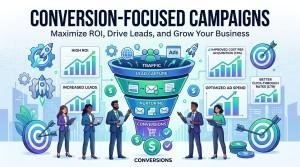
A successful marketing campaign is not simply about reaching a large audience. It is about reaching the right people, delivering a useful message, and encouraging them to take a meaningful action. That action could be making a purchase, requesting a demo, signing up for a service, downloading a resource, or becoming a returning customer.
This is where conversion-focused campaigns become important. Instead of measuring success only through impressions, clicks, or audience size, these campaigns are designed around a clear business goal. Every part of the campaign, from the subject line to the landing page, works toward helping the audience move one step closer to conversion.
A strong campaign should also put the reader first. Google recommends creating helpful, reliable, people-first content that provides genuine value rather than content created mainly to manipulate search rankings. The same principle can be applied to marketing: understand the audience, solve a real problem, communicate honestly, and make the next step simple.
What Are Conversion-Focused Campaigns?
Conversion-focused campaigns are marketing campaigns created with a specific action in mind. Rather than sending a general promotional message to everyone, marketers identify what they want recipients to do and build the campaign around that objective.
For example, an online store may want customers to purchase a new product. A software company may want visitors to schedule a product demonstration. A service provider may want potential customers to submit an inquiry form.
The important point is that the campaign has a defined purpose.
A conversion does not always mean a sale. Depending on the business, it could be an email signup, free trial, consultation request, registration, download, or another valuable action. Defining the conversion before creating the campaign helps ensure that the message, offer, design, and call to action all support the same goal.
Why Conversion-Focused Campaigns Matter
Many businesses invest considerable time in attracting visitors and building an audience, but attention alone does not generate sustainable growth. A campaign can receive thousands of views and still produce disappointing results if people do not understand what to do next.
Conversion-focused campaigns solve this problem by connecting marketing activity with measurable outcomes.
They also help businesses understand what their audience actually responds to. When marketers track conversions, they can identify which offers, messages, audiences, and campaign elements are producing useful results. Over time, this information can make future campaigns more relevant and efficient.
Another advantage is better communication. When a campaign has one clear objective, the message is usually easier to understand. Instead of presenting too many offers or unrelated ideas, the campaign can focus on one problem and one logical next step.
Start With a Clear Campaign Goal
The first step in building a conversion-focused campaign is deciding what success looks like.
A vague objective such as “increase engagement” is difficult to turn into a focused campaign. A stronger goal might be “increase free-trial registrations” or “generate more qualified consultation requests.”
Once the goal is clear, determine which action represents a conversion. This creates a simple framework for the rest of the campaign.
For instance, if the goal is to generate product sales, the campaign may focus on a specific product benefit, customer need, limited-time offer, and purchase page. If the goal is to generate leads, the campaign may instead offer a useful guide or consultation in exchange for contact information.
A clear goal also makes reporting easier because marketers can compare campaign performance against an outcome that matters to the business.
Know the Audience Before Creating the Message
Even a well-designed campaign can perform poorly if it speaks to the wrong audience.
Understanding the target audience means looking beyond basic information such as age or location. Marketers should consider what customers need, what problems they face, what questions they ask, and what might prevent them from taking action.
Audience research can come from customer conversations, previous campaign results, website behavior, support questions, reviews, and feedback. These sources can reveal the language customers naturally use when describing their problems.
That information can then shape the campaign message.
For example, instead of focusing heavily on technical features, a campaign might explain how a product saves time or reduces a common frustration. This makes the message easier to relate to because it connects the offer with an actual customer need.
Create an Offer That Provides Real Value
A conversion usually happens when the audience sees a clear reason to act.
That reason does not always have to be a discount. Value can come from convenience, useful information, exclusive access, a free trial, a helpful resource, or a solution to a specific problem.
The offer should be easy to understand. If readers have to spend too much time figuring out what they will receive, interest can quickly disappear.
Good conversion campaigns answer three basic questions:
- What is being offered?
- Why is it useful?
- What should the reader do next?
When these questions are answered clearly, the campaign becomes easier to follow.
Write a Message That Leads Naturally to Action
The copy used in a conversion-focused campaign should be clear, relevant, and honest. A strong opening can identify a problem or introduce a benefit that matters to the audience.
The rest of the message should support that idea rather than distracting the reader with unnecessary information.
A useful structure is to introduce the problem, explain the solution, show why the solution is valuable, and then provide a clear next step. Supporting information such as customer experiences, product details, demonstrations, or evidence can be added when it helps the reader make a confident decision.
Trust is especially important. Google advises that email content, sender information, and subject lines should not be misleading or deceptive. The same standard is valuable for conversion marketing because short-term clicks are less useful when they create disappointment or damage customer trust.
Use Email Marketing With a Conversion in Mind
Email can be an effective channel for conversion-focused campaigns because businesses can communicate directly with people who have already shown interest.
However, successful email campaigns are more than promotional messages sent to a large list. They depend on relevance, timing, segmentation, and a useful reason for the recipient to pay attention.
Modern email marketing solutions can support campaign planning, audience segmentation, personalization, automation, testing, and performance measurement. These capabilities can help businesses create more relevant communication instead of sending exactly the same message to every subscriber.
For example, someone who has downloaded a guide may need educational content before receiving a sales offer. A previous customer may be more interested in an upgrade or related product. Treating these audiences differently can make the campaign more useful and improve the chances of conversion.
Make Newsletter Management Part of the Strategy
Consistent communication can help businesses build familiarity and trust over time. However, sending frequent emails without a clear purpose can have the opposite effect.
Effective Newsletter Management involves maintaining organized subscriber information, planning useful content, monitoring engagement, and respecting subscriber preferences. It is not simply about sending emails on a schedule.
A newsletter should give readers a reason to open the next issue. Educational insights, practical advice, product updates, relevant offers, and original perspectives can all provide value when they match the audience's interests.
Email frequency should also be reasonable and clearly communicated. Gmail's guidance recommends setting expectations around frequency and avoiding messages that recipients find consistently unhelpful.
Build a Strong Call to Action
A campaign can contain excellent information and still struggle to convert if the call to action is unclear.
The call to action should tell readers exactly what happens next. Instead of using a vague phrase such as “Click Here,” marketers can use action-oriented language that describes the next step, such as “Start Your Free Trial,” “Request a Consultation,” or “Explore the Collection.”
The CTA should also match the campaign goal. If the campaign is designed to generate leads, asking people to make a purchase immediately may create unnecessary friction. The next step should feel natural based on where the audience is in its decision-making process.
Reduce Friction on the Conversion Page
Getting someone to click is only part of the journey. The destination must make completing the desired action easy.
A landing page should reinforce the promise made in the campaign. If an email promotes a free guide, for example, the landing page should immediately explain what the guide contains and how to access it.
Forms should request only information that is genuinely needed. Confusing navigation, slow pages, unclear pricing, excessive form fields, or unexpected steps can discourage potential customers.
Consistency also matters. The wording, offer, and expectations created in the campaign should match the landing page. This creates a smoother experience and helps maintain trust.
Test Different Campaign Elements
Conversion-focused marketing improves through testing rather than guesswork.
Marketers can test subject lines, headlines, offers, images, CTA wording, email layouts, audience segments, and landing-page elements. The goal is not to change everything at once but to identify which changes influence meaningful results.
For example, if two subject lines generate similar open rates but one version produces more conversions, the second version may have attracted people who were more interested in the actual offer.
Testing should therefore focus on business outcomes, not just surface-level engagement.
Measure the Metrics That Matter
A conversion-focused campaign should be evaluated using metrics connected to its objective.
Important measurements may include conversion rate, cost per conversion, revenue generated, lead quality, customer acquisition cost, and return on marketing investment. Open and click rates can still provide useful diagnostic information, but they should not become the only measure of success.
For example, a campaign with a high click rate but very few completed purchases may have an issue with the offer or landing page. On the other hand, a campaign with fewer clicks but a strong conversion rate may be reaching a smaller yet more qualified audience.
Looking at the complete customer journey gives marketers a better understanding of campaign performance.
Protect Deliverability and Customer Trust
Conversion-focused campaigns should never sacrifice long-term trust for short-term results.
Businesses should send messages to people who have a legitimate reason to receive them and provide an appropriate way to stop receiving unwanted communications. Email authentication is also important for deliverability. Gmail currently recommends authentication practices including SPF and DKIM, along with other requirements and best practices for senders.
Clear sender information, accurate subject lines, relevant content, and transparent unsubscribe options contribute to a healthier relationship with subscribers.
Trust is not simply a compliance issue. It is a marketing asset. People are more likely to engage with businesses when they understand who is contacting them and why.
Avoid Common Conversion Campaign Mistakes
One common mistake is trying to promote too many things in one campaign. When every element competes for attention, the reader may not know which action matters most.
Another mistake is focusing entirely on the company's features instead of the customer's needs. Features can be useful, but they become more persuasive when explained in terms of the problems they solve or the benefits they provide.
Poor targeting is another issue. Sending irrelevant offers to people who have shown no interest in them can lead to disengagement and unsubscribes.
Finally, businesses sometimes judge a campaign too quickly. A meaningful evaluation should consider the full conversion journey and enough data to identify a reliable pattern rather than relying on a single metric.
The Role of Personalization
Personalization can make a campaign feel more relevant when it is used thoughtfully.
Simple personalization might include a recipient's name, previous purchase category, content interest, or stage in the customer journey. More advanced approaches can use behavioral information to deliver different messages based on actions a customer has taken.
The objective should not be to make the campaign appear overly automated. The objective is to make the information more useful.
Good personalization answers the question, “Why is this message relevant to this person right now?”
Conclusion
Conversion-focused campaigns are built around a simple idea: marketing should lead toward a meaningful outcome while providing genuine value to the audience. A clear goal, relevant audience, useful offer, persuasive but honest message, strong call to action, smooth landing-page experience, and careful measurement can work together to improve campaign performance.
Businesses should also remember that conversion is not only about making a sale today. Building trust, delivering useful information, respecting customer preferences, and creating positive experiences can support stronger relationships over the long term.
By combining audience understanding with thoughtful strategy, testing, measurement, and responsible communication, brands can create campaigns that are both effective and customer-friendly. Following people-first principles also supports the broader goal of creating useful, trustworthy content rather than content designed simply to attract attention.
For businesses looking to improve how they attract, engage, and convert audiences, a thoughtful approach supported by tools and expertise from brands such as Mails Extract can help turn ordinary campaigns into more purposeful customer journeys.
 Deutsch
 English
 Arabic
 French
 Spanish
 Portuguese
 Turkish
 Dutch
Dutch
 Italiano
 Russian
 Romaian
 Portuguese (Brazil)
 Greek
Greek