


KP AUTOMATIONS Pasta Machines for Scalable Food Manufacturing
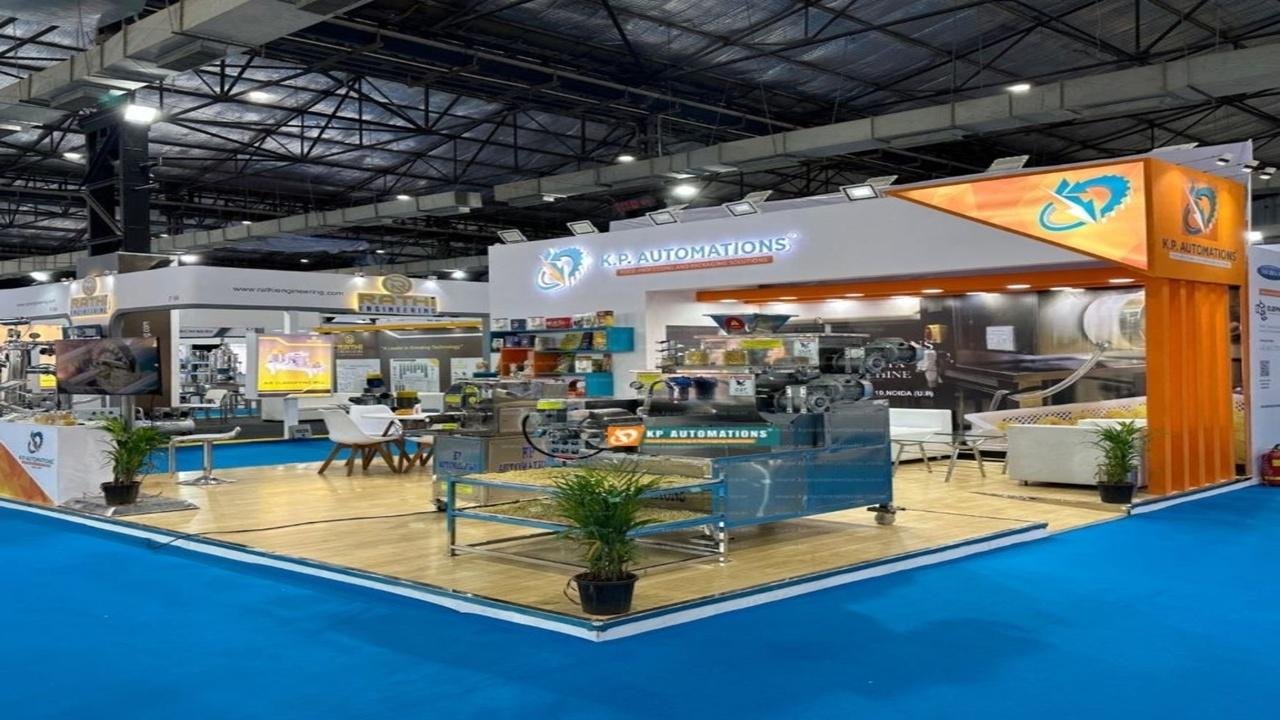
The pasta industry has moved well beyond small-scale manual preparation. As demand for packaged pasta continues to create opportunities for food manufacturers, businesses need production equipment capable of delivering consistent quality while handling increasing volumes. This is where modern pasta machines become an important part of commercial food manufacturing.
A properly selected pasta machine can support several critical stages of production, from dough preparation and extrusion to shaping and integration with drying and packaging systems. The right configuration allows manufacturers to build a production setup around their required capacity, pasta formats, factory space, and future expansion plans.
KP AUTOMATIONS manufactures and exports pasta machinery for commercial and industrial applications. The company states that it began operations in 1998 and has installed more than 4,000 pasta machines globally.
What Makes Industrial Pasta Machines Different?
A commercial pasta operation requires considerably more consistency than occasional fresh-pasta production. When hundreds of kilograms of product need to be manufactured repeatedly, manual processing can create challenges related to consistency, labor, production speed, and process control.
Industrial pasta machines are designed to mechanize key production operations.
Depending on the production line, these can include:
- Mixing semolina or flour with water
- Dough preparation and kneading
- Vacuum processing
- Extrusion through dies
- Shaping and cutting
- Pre-drying
- Controlled drying
- Cooling
- Integration with packaging equipment
KP AUTOMATIONS describes its machinery as suitable for commercial and industrial pasta production, with food-grade stainless-steel construction, automation, and precision engineering.
This type of integrated approach can make production easier to standardize as the business grows.
Selecting Pasta Machines Based on Factory Size
One of the most common mistakes during machinery selection is focusing only on maximum output.
A machine should be selected according to actual production requirements. A small manufacturer may need a compact system, while a large food-processing company may require a continuous high-capacity line.
KP AUTOMATIONS offers several production categories.
Its compact series includes a 50 kg/hr model intended for smaller and mid-scale manufacturers and a 100 kg/hr option for businesses looking for additional production capacity.
Its mid-size range includes 200 kg/hr, 300 kg/hr, and 500 kg/hr systems for growing manufacturers.
For enterprise-scale operations, KP AUTOMATIONS lists industrial systems capable of approximately 1,000 to 2,200 kg/hr and a mega production system with output up to 5,000 kg/hr.
This range demonstrates why production planning should come before selecting a specific machine.
The Importance of Matching Capacity With Demand
Production capacity directly affects equipment utilization and operating economics.
Suppose a manufacturer currently requires only 100 kg of pasta per hour. Installing a substantially larger production system without a clear demand plan may result in underutilized equipment.
On the other hand, if a manufacturer has rapidly growing orders, a machine with insufficient capacity can create bottlenecks.
A practical machinery assessment should therefore consider:
Current demand + expected growth + operating hours + product mix + expansion plans
This approach helps businesses choose pasta machines that are neither unnecessarily oversized nor immediately restrictive.
Pasta Machines and Product Variety
Pasta manufacturers rarely want to be limited to one product forever.
Consumer preferences can include macaroni, penne, fusilli, vermicelli, spaghetti, linguine, fettuccine, and other specialty formats. Production equipment should therefore be evaluated for its ability to support the manufacturer's intended product portfolio.
KP AUTOMATIONS' short-cut systems are designed for products including macaroni, vermicelli, fusilli, and other short-cut varieties.
For long-cut products, the company provides dedicated production systems for spaghetti, linguine, fettuccine, and other long pasta formats. Its long-cut line uses equipment and molds suited to different lengths and thicknesses, with PLC-based line management.
This product flexibility can be particularly valuable for businesses that want to introduce additional SKUs over time.
Why Extrusion Quality Matters
Extrusion is one of the most important stages in pasta manufacturing.
The prepared dough passes through a die to create the required pasta profile. The stability of this process can influence the shape, dimensions, and overall consistency of the finished product.
Industrial equipment therefore needs to provide reliable extrusion performance during extended production runs.
KP AUTOMATIONS' higher-capacity systems use high-performance compression screws and total vacuum technology, according to the company's product information. These systems are designed to maintain controlled dough density and texture while operating at high production volumes.
For manufacturers, this can be particularly important when producing large quantities of pasta for consistent commercial distribution.
Automation and Production Control
Modern food factories increasingly rely on automation to improve repeatability.
A pasta machine with automated controls can reduce dependence on repetitive manual operations while helping operators manage production parameters more consistently.
KP AUTOMATIONS incorporates automation and PLC-based control into its production systems. Its long-cut pasta lines, for example, use a PLC Control System for line management.
Automation can support:
- Consistent processing
- Better coordination between machine sections
- Reduced repetitive labor
- Easier monitoring
- Improved production repeatability
- Integration with downstream equipment
The required level of automation will depend on production volume and the manufacturer's operational strategy.
Connecting Pasta Machines With Drying Systems
For dried pasta manufacturing, extrusion is only one part of the production process.
After shaping, the pasta must pass through controlled drying stages. The drying process reduces moisture and helps establish the required final product characteristics.
For this reason, a manufacturer planning a commercial facility should consider how the pasta machines will connect with pre-drying and final drying systems.
KP AUTOMATIONS' industrial pasta systems incorporate drying technology designed around controlled ventilation and temperature management. Its higher-capacity systems also describe energy-management features intended to improve efficiency during drying.
Planning these stages together can create a smoother production flow and reduce unnecessary material handling.
Short-Cut and Long-Cut Production Require Different Approaches
Pasta shape affects machinery requirements.
Short-cut products such as macaroni, penne, and fusilli require extrusion and cutting configurations appropriate for their individual shapes.
Long-cut products such as spaghetti and linguine require a different production arrangement because the strands need to be formed, handled, dried, and cut appropriately.
KP AUTOMATIONS provides both short-cut and long-cut production solutions. Its commercial long-pasta systems are designed for products such as spaghetti, fettuccine, and linguine, while its short-cut equipment supports products including macaroni and fusilli.
Manufacturers should therefore identify their product category before selecting machinery.
Food-Grade Construction for Commercial Production
Hygiene is a fundamental requirement in food manufacturing.
Equipment should be designed to withstand regular operation while allowing suitable cleaning and maintenance. Materials used in product-contact areas are especially important.
KP AUTOMATIONS states that its pasta machinery uses food-grade stainless steel construction.
When comparing pasta machines, manufacturers should look beyond the basic material specification and also consider machine accessibility, cleaning requirements, maintenance points, component durability, and overall production-line hygiene.
Planning the Factory Layout
Purchasing machinery without considering the factory layout can create operational problems later.
A commercial pasta facility needs space not only for the primary machine but also for raw material movement, drying equipment, cooling, packaging, utilities, operator access, maintenance, and finished-product handling.
A typical production sequence can be organized as:
Raw Material Handling → Mixing → Dough Preparation → Extrusion → Shaping → Pre-Drying → Drying → Cooling → Packaging
The actual layout will vary depending on capacity, pasta type, equipment configuration, and building dimensions.
KP AUTOMATIONS offers modular production systems, which can allow manufacturers to configure equipment around specific facility requirements.
Planning for Future Expansion
A pasta business that succeeds in one market may eventually need more capacity.
Instead of designing machinery requirements only around today's sales, manufacturers should consider where the business is expected to be several years from now.
Expansion may involve:
- Increasing hourly output
- Adding new pasta shapes
- Installing additional drying capacity
- Automating material handling
- Upgrading packaging
- Adding another production line
A scalable equipment strategy can make these changes easier to manage.
KP AUTOMATIONS provides machinery ranging from compact systems to large-scale production lines, allowing manufacturers to consider different capacity levels as their businesses develop.
Evaluating the Total Machinery Investment
The purchase price of a machine is only one part of the overall investment.
Manufacturers should also consider:
- Installation
- Factory preparation
- Electrical requirements
- Drying infrastructure
- Packaging equipment
- Maintenance
- Spare parts
- Operator requirements
- Production downtime
- Future upgrades
A lower initial equipment cost does not automatically mean a better long-term investment.
The objective should be to select pasta machines that provide an appropriate balance between production capacity, automation, product flexibility, reliability, and operating requirements.
Why KP AUTOMATIONS?
KP AUTOMATIONS presents itself as an Indian manufacturer and exporter of pasta machinery with more than 25 years of industry experience. The company states that it has installed more than 4,000 pasta machines worldwide and provides solutions ranging from individual machinery to complete pasta production and packing lines.
Its portfolio covers compact pasta machines, mid-size systems, industrial production lines, long-cut pasta equipment, drying technology, and packaging solutions.
For manufacturers planning a new pasta factory or upgrading an existing facility, having access to multiple stages of the production process can simplify equipment planning and integration.
Conclusion
Choosing the right pasta machines is an important step toward building a dependable commercial food-production operation.
The best solution depends on much more than production capacity. Manufacturers need to evaluate pasta types, extrusion requirements, automation, drying, factory space, hygiene, maintenance, packaging, and future expansion.
A properly selected pasta machine can help manufacturers establish consistent production while creating a foundation for higher capacity and broader product development.
With equipment ranging from compact 50 kg/hr systems to industrial solutions reaching several thousand kilograms per hour, KP AUTOMATIONS provides machinery options for different stages of pasta manufacturing.
For businesses looking to establish or modernize a pasta production facility, careful machinery selection can turn production requirements into a scalable and efficient manufacturing system.

 English
 Arabic
 Spanish
 Portuguese
 Deutsch
 Turkish
 Dutch
Dutch
 Italiano
 Russian
 Romaian
 Portuguese (Brazil)
 Greek
Greek